

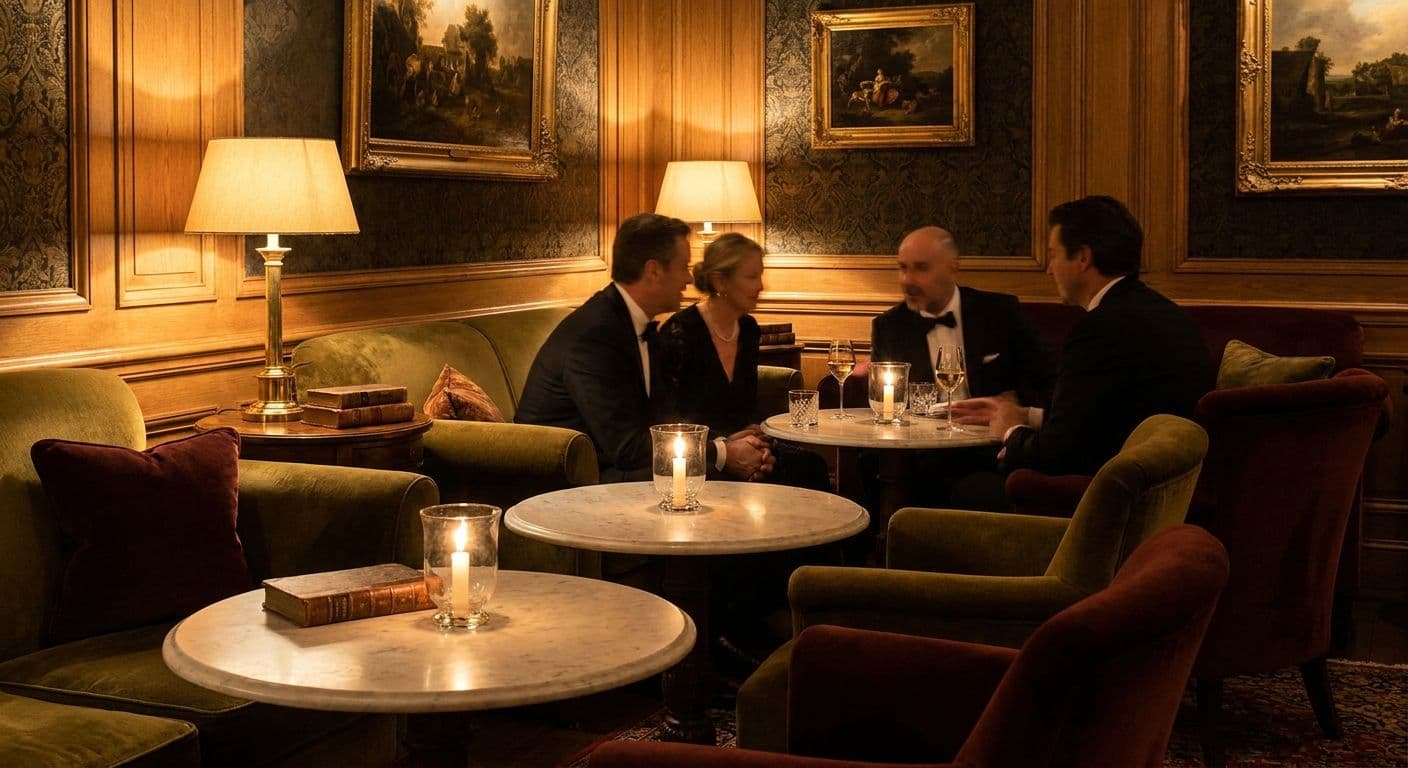
There's a moment at the door of a good members' club that has nothing to do with the wine list. A host says your name before you give it. The table you like is already held. The bartender remembers you take it without the garnish. Nothing about that exchange is expensive to reproduce — and yet most hotels and restaurants, sitting on far more guest data than any club, still greet their best customers as strangers.
The private membership boom of the last decade — Soho House and the sprawling field of imitators, the resurgence of private dining clubs, the quiet arms race of hotel loyalty tiers — looks like a story about exclusivity. It isn't. It's a story about belonging. And belonging is a mechanic, not a mystique. Any hospitality brand can build it.
Belonging Beats Discounts Every Time
Discounts are a race you lose by winning. Train a guest to wait for 20% off and you've taught them your rates are negotiable, your brand is a commodity, and the OTA down the road is just as good. The discount is forgotten the moment it's spent.
Belonging compounds. A member doesn't ask what a club costs the way a shopper asks what a room costs, because they aren't buying a transaction — they're buying an identity, a room full of people they want to be counted among, and the confidence of being known. That's why clubs can charge annual dues for access to a bar anyone could technically walk past.
The lesson for hotels and restaurants isn't "go private." It's that the emotional job to be done — I belong here, and here I am someone — is worth more than any price cut, and it's almost entirely unclaimed in the middle market.
- Discounts attract the disloyal; belonging retains the loyal.
- Discounts erode margin; belonging protects it.
- Discounts are copied in a day; a genuine sense of membership takes years to build and is nearly impossible to steal.
Owned Relationships Are the Real Prize
Underneath the velvet rope is something far more strategic: the club owns its relationship with every member outright. No intermediary sits between the brand and the guest. No platform rents them their own audience.
Most hotels and restaurants operate the opposite way. The OTA owns the booking. The reservation platform owns the diner's history. The delivery app owns the customer entirely — name, preferences, frequency, all of it — and leases it back one commission at a time. You are paying, handsomely, to remain a stranger to the very people who love you most.
First-party data flips that. When a guest creates an account with you, books direct with you, and joins a list that you control, you own the relationship that competitors and platforms are trying to rent you. That ownership is the entire game:
- Direct margin — every direct booking or reservation is revenue that doesn't pay a toll.
- Durability — algorithm changes and platform fee hikes can't touch a relationship you own.
- Intelligence — you finally see the full guest, not the sliver a platform chooses to show you.
- Leverage — a brand that can reach its guests directly negotiates from strength, not dependence.
A membership mindset is, at bottom, a first-party-data strategy wearing a nicer jacket.
The Digital Mechanics That Manufacture Belonging
Belonging feels like magic on the floor. Behind the scenes it's a system, and most of that system now lives in software. These are the mechanics clubs use — and every one of them is available to a hotel or restaurant group willing to build it.
- A real account, not a checkbox. A guest profile that persists across visits, properties, and channels — remembering preferences, dietary notes, the anniversary table, the usual room. The account is the container belonging lives in.
- Personalization that proves you were paying attention. "Welcome back" is table stakes. "Your regular corner table is confirmed, and yes — the '18 is back on the list" is the moment a customer becomes a member in their own mind.
- Exclusive access, not just cheaper prices. Early booking windows, members-only events, the chef's table before it's public, the suite upgrade that isn't advertised. Access signals status; discounts signal desperation.
- Owned email and SMS. Your direct line to the guest, unmediated by any feed. Used well — timely, personal, genuinely useful — it's the highest-ROI channel in hospitality. Used lazily, it's spam. The difference is whether it reads like a note from someone who knows them.
- Community, not just communication. Clubs work because members meet other members. Restaurants and hotels can borrow this: supper clubs, tasting groups, a members' events calendar, a reason to return that includes other people.
- An AI concierge that actually remembers. This is where the frontier is moving. A concierge on your site and in your messaging that knows a guest's history, answers in seconds, books direct, and greets a returning visitor by name and preference — the digital equivalent of the host at the door. It scales the single most valuable thing a club offers — being known — to every guest, at any hour, without a maître d' per person.
None of these require a private clubhouse. They require intent, and a website built to hold the relationship rather than merely close the sale.
Building the Membership Mindset Into Your Site and Marketing
Most hospitality websites are still designed as vending machines: land, look, book, leave. A membership mindset redesigns the site as a front door to a relationship — one that gets warmer, and more useful, every time a guest returns.
Concretely, that means:
- Make the account worth having. Give guests a real reason to sign in: saved preferences, faster booking, member rates, saved stays, exclusive access. If signing up does nothing, no one will.
- Reward direct, relentlessly. Best rate, best table, best perks — only when you book with the brand. Every incentive should pull the relationship off third-party platforms and onto ground you own.
- Tier the belonging. Even a simple "regulars" or "insiders" layer creates a ladder guests want to climb. Status is a renewable resource; use it.
- Design the returning-guest experience, not just the first visit. The second visit should feel measurably different from the first. Most sites treat every visit like a cold open. Yours shouldn't.
- Instrument everything, ethically. Capture preferences with consent, use them visibly to the guest's benefit, and let the data make each interaction smarter than the last.
- Let AI carry the memory. A concierge that recalls the last stay, the usual order, the noted allergy turns first-party data from a spreadsheet into a felt experience.
Marketing then stops being a campaign you shout and becomes a membership you tend — segmented, personal, direct, and owned.
The Takeaway
The members-only club didn't invent belonging; it just monetized it with unusual honesty and built the systems to deliver it at scale. The velvet rope is optional. The mechanics behind it are not — and they're now, thanks to accounts, first-party data, and AI that remembers, within reach of any hotel or restaurant group with the ambition to be known rather than merely booked.
The brands that win the next decade won't be the ones with the best discount. They'll be the ones whose guests feel, the moment they arrive — online or at the door — that they finally belong somewhere. That feeling is buildable. The only question is whether you'll build it, or keep renting your guests back from someone who did.