

The Factory Kitchen (thefactorykitchen.com) sits in a converted industrial space in LA's Arts District, serving Northern Italian food that earned a Michelin Bib Gourmand. It's the kind of restaurant where the pasta is made by hand, the dining room hums with energy, and first-time guests become regulars. Their website needs to communicate all of that before anyone walks through the door.
It does.
As a studio that builds websites for restaurants and hospitality brands, we pay attention to what works in this space. The Factory Kitchen's digital presence is a case study in how to translate a restaurant's soul into a screen. Here's what they get right — and what every restaurant group can take from it.
→ Visit The Factory Kitchen Website
The Photography Does the Selling
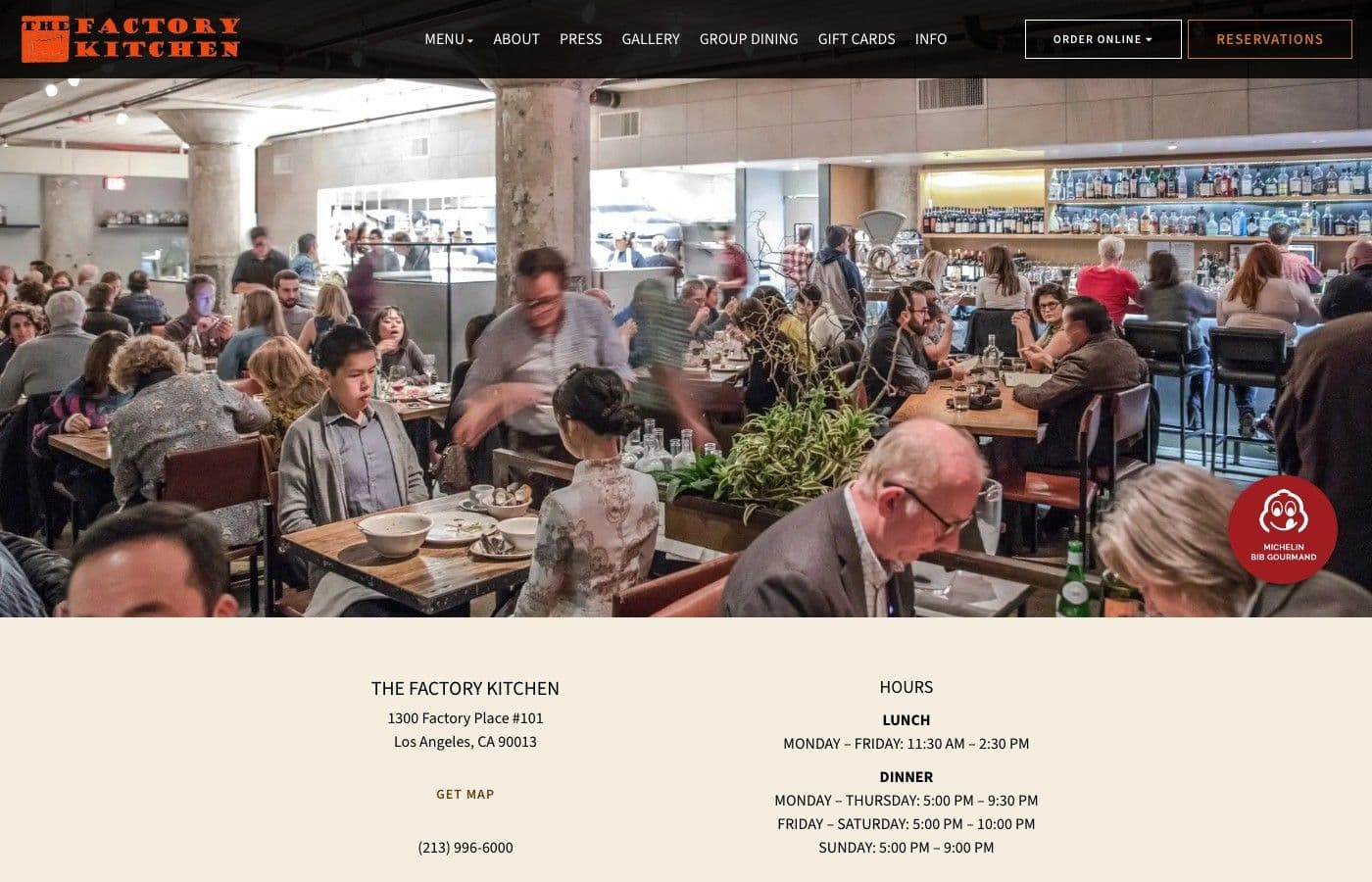
The homepage of thefactorykitchen.com — full-bleed photography that captures the energy of the dining room, not just the food.
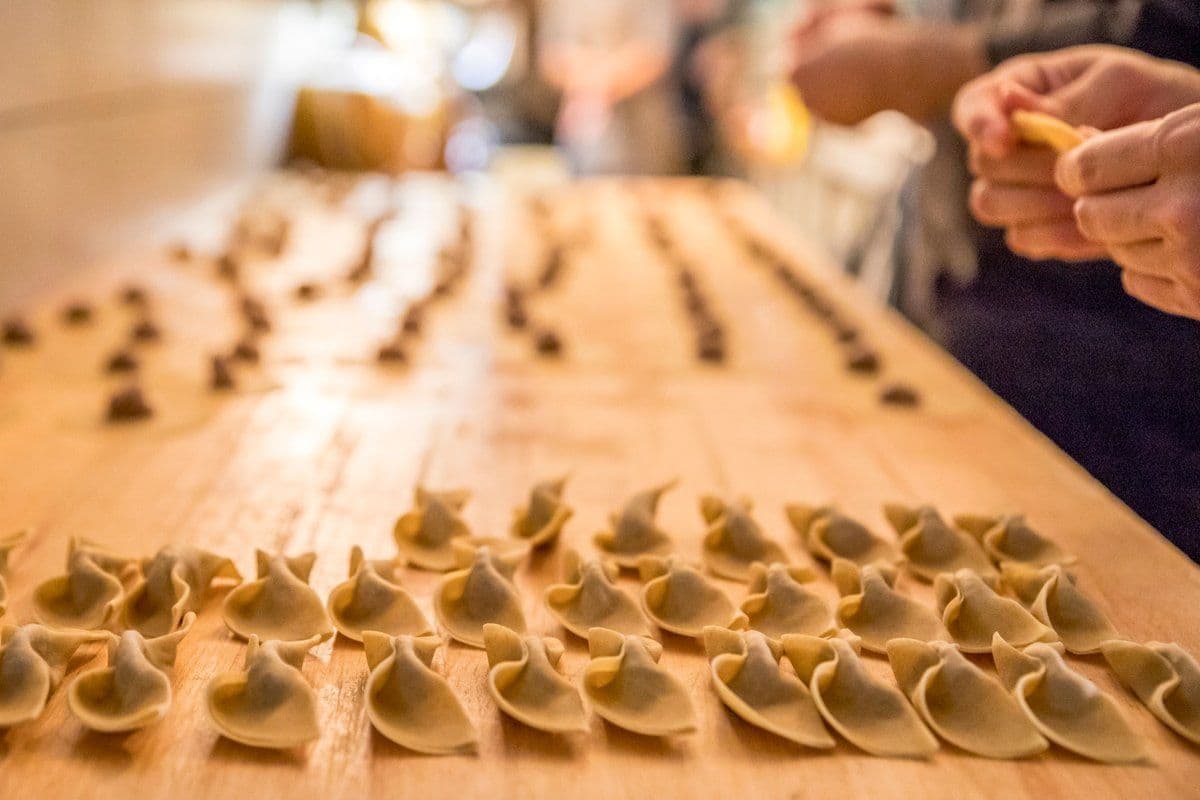
The first thing you notice is the imagery. Not stock photos, not flat lay food shots with white backgrounds — real moments from the restaurant. Pasta being pulled, bartenders in motion, the warmth of the dining room at golden hour. This is the kind of photography that makes someone pick up their phone and book a table.
The lesson: Invest in photography that captures energy, not just food. A beautifully plated dish matters, but the experience of being in the room is what sells the reservation. Show the hands making the pasta. Show the bar at 8 PM on a Friday. Show the patio with the string lights. That's what your website's hero section should feel like.
The Menu Is Content, Not Just a PDF
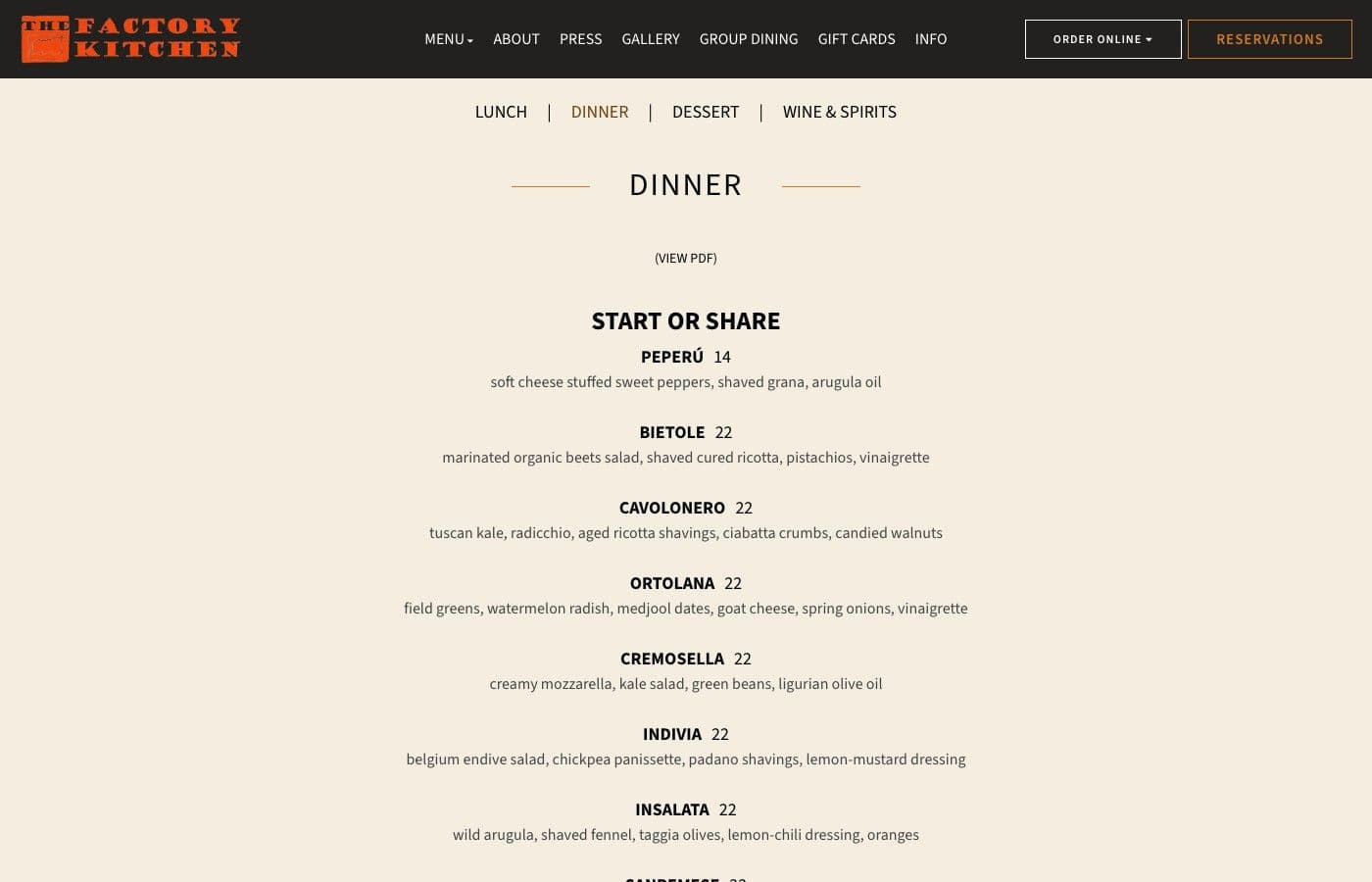
The Factory Kitchen's menu page — dishes presented as styled content with evocative descriptions, not a downloadable PDF.
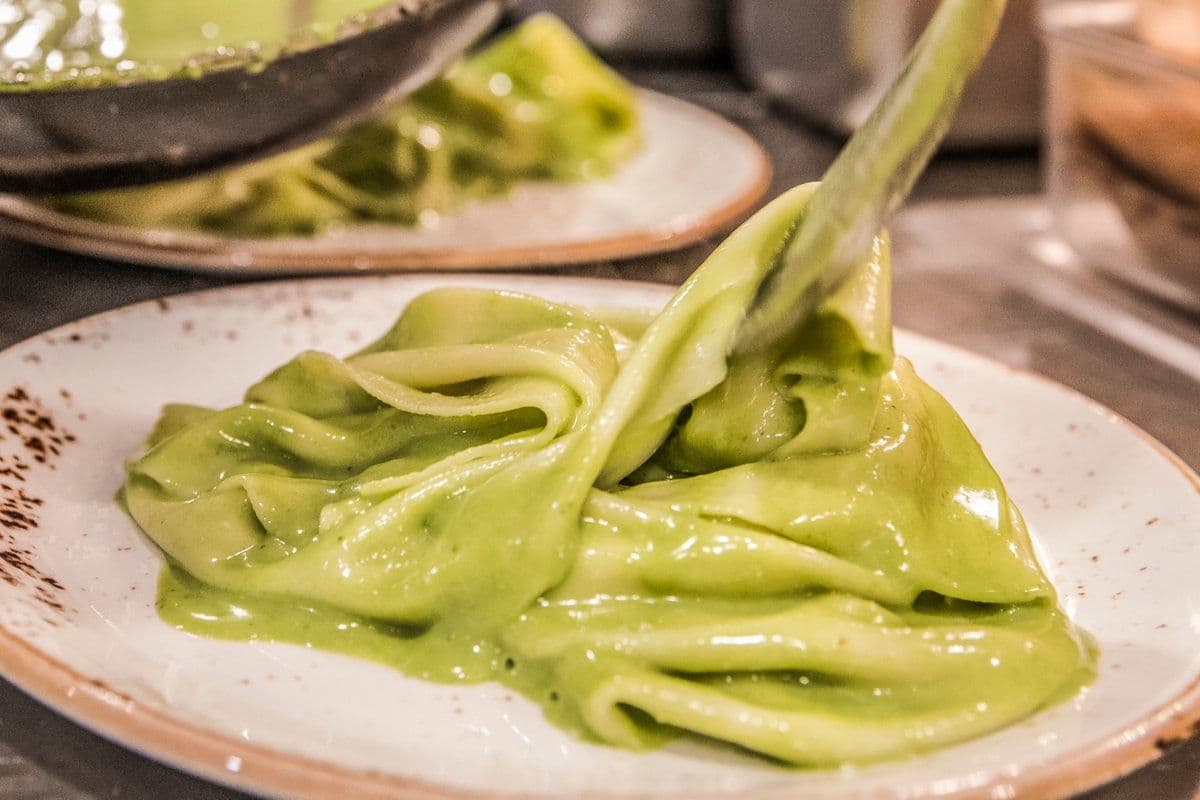
Too many restaurant websites treat the menu as an afterthought — a PDF link buried three clicks deep. The Factory Kitchen presents their menu as real, styled content on the page. Dishes have descriptions that read like invitations. Their signature Mandilli di Seta — handkerchief pasta with Ligurian pesto — is described as "delicate silk handkerchiefs of pasta draped with the bright, herbaceous flavors of the Italian Riviera."
That's not a menu item. That's a reason to drive to the Arts District.
The lesson: Your menu is the most-visited page on your restaurant website. Treat it like a storytelling opportunity, not a file download. Write descriptions that evoke flavor, texture, and origin. Use web-native menus that Google can crawl and index — PDFs are invisible to search engines and terrible on mobile.
Reservations Are Frictionless
The reservation page — OpenTable embedded directly into the brand experience, no redirect to a third-party domain.
The Factory Kitchen integrates OpenTable directly into their site. The reservation widget is prominent, easy to find, and doesn't redirect you to a different domain that breaks the visual experience. You pick your date, time, and party size without leaving the brand environment.
The lesson: Every click between "I want to eat here" and "I have a reservation" is a chance to lose the guest. Embed your reservation system — whether it's OpenTable, Resy, or SevenRooms — directly into your website. Match the styling to your brand. The booking experience should feel like an extension of your restaurant, not a detour to a third-party platform.
The Brand Voice Is Consistent
From the headline copy to the menu descriptions to the about section, The Factory Kitchen maintains a consistent voice: warm, confident, unpretentious. It reads like the restaurant feels. There's no corporate stiffness, no tryhard hipster vocabulary. Just a genuine Italian trattoria that knows exactly what it is.
The lesson: Your website copy should sound like your best host — the person who makes every guest feel like they're in on something special. Write in the same voice your team uses at the door. If your restaurant is playful, be playful online. If it's refined, be refined. But never be generic. "Farm to table" and "elevated dining" tell the reader nothing.
The Mobile Experience Works
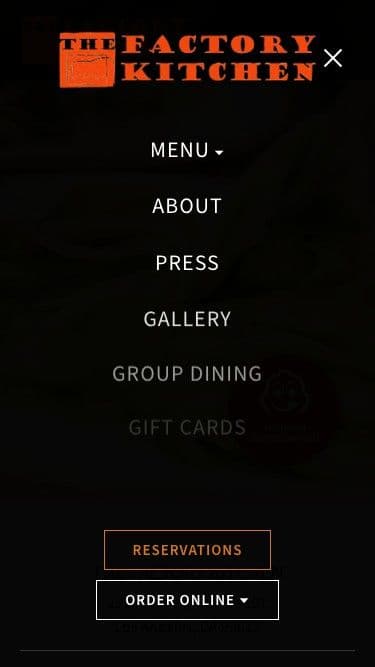
The Factory Kitchen's mobile navigation is clean and functional — logo, full menu access, reservations button, and contact info all visible without scrolling through clutter. Over 70% of restaurant website traffic comes from mobile, and this is exactly what a mobile-first restaurant experience should look like.
The lesson: Test your restaurant website on a phone before anything else. If your menu is hard to read, your reservation button is below the fold, or your hours are buried in the footer — you're losing guests. The mobile experience is the primary experience.
Location and Logistics Are Clear
The Factory Kitchen makes practical information easy to find: address in the Arts District, hours for lunch and dinner, valet parking rates, private dining options. This sounds basic, but a shocking number of restaurant websites make you hunt for hours or hide the address in a footer.
The lesson: Put your address, hours, and phone number where they can't be missed. Include parking details — in Los Angeles especially, this is a make-or-break factor for diners deciding between your restaurant and the one with self-parking. If you have private dining or event space, give it its own page with capacity, pricing ranges, and a contact form.
AI Under the Hood
What makes The Factory Kitchen's website particularly interesting from a technical standpoint is the number of AI components embedded throughout the experience. This isn't a static brochure site — it's a platform with intelligence built in.
The site runs on a modern headless architecture (Next.js + Sanity CMS) that powers several AI-driven features: intelligent content management that lets the team update menus, events, and specials without touching code; automated SEO optimization that structures content for search engines in real time; and smart image processing that serves the right resolution and format based on the visitor's device and connection speed.
These aren't flashy, guest-facing gimmicks — they're the kind of invisible AI that makes everything work faster, rank higher, and convert better. The guest doesn't see the technology. They just notice that the site feels fast, the information is always current, and booking a table takes ten seconds.
The lesson: The best AI in a restaurant website is the kind your guests never notice. It powers the experience behind the scenes — faster load times, smarter search results, dynamic content that stays current without manual updates. When AI is done right, the website just works better than the competition's, and your team spends less time managing it.
What The Factory Kitchen Could Add
No website is perfect, and there are opportunities The Factory Kitchen could explore to go further:
AI-powered guest support: A chatbot trained on the menu, wine list, and dietary accommodations would answer the questions that currently go to voicemail — "Do you have gluten-free pasta?" "Is the patio dog-friendly?" "Can I buy gift cards?"
Chef and origin story: Chef Angelo Auriana and restaurateur Matteo Ferdinandi have a compelling story. A dedicated section about the team, their Italian roots, and their philosophy would build connection and give food writers quotable material.
Local SEO depth: Location-specific landing pages targeting "best Italian restaurant Arts District" or "pasta restaurant Downtown LA" would capture high-intent local searches that currently go to Yelp and Google Maps listings.
The Bigger Picture for Restaurant Groups
The Factory Kitchen is a single-location restaurant, but the principles apply at scale. Multi-location restaurant groups face the same challenges amplified: maintaining brand consistency across locations, managing menus that change by market, and driving reservations without defaulting to third-party discovery platforms.
At Orph Media, we build restaurant websites that handle all of this — from dynamic menu management that your team updates without a developer, to AI-powered guest chatbots, to local SEO strategies that put your restaurant above Yelp in search results. We've worked with Wolfgang Puck, LPM Restaurant Group, Varka, and restaurant brands across New York, Los Angeles, and London. See our restaurant web design services.
Visit The Factory Kitchen at thefactorykitchen.com — and if your restaurant's website isn't working this hard for you, let's talk.
If your restaurant's website doesn't make someone hungry, it's not doing its job. And if it's not converting that hunger into a reservation, it's leaving money on the table — literally.